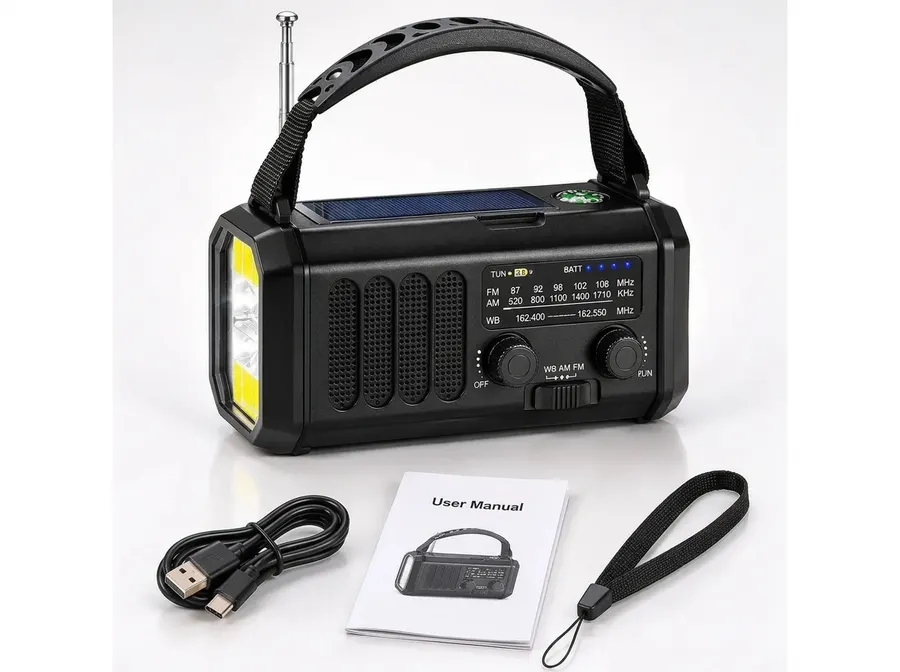
First-Time Emergency Kit Builders Are Skipping the Drawer Full of Gadgets for One 500g Radio — It Recharges Itself by Sun, Hand Crank, or USB
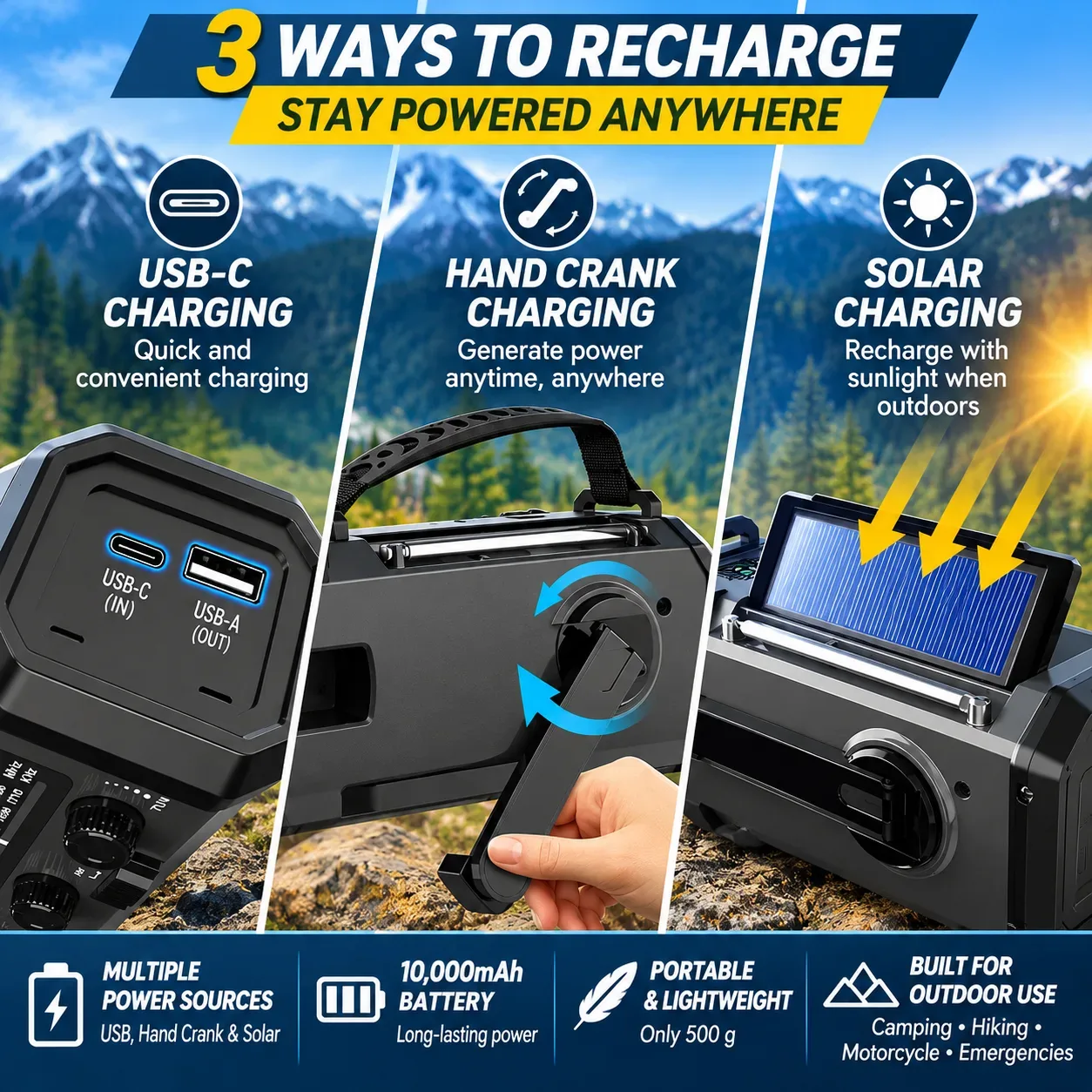
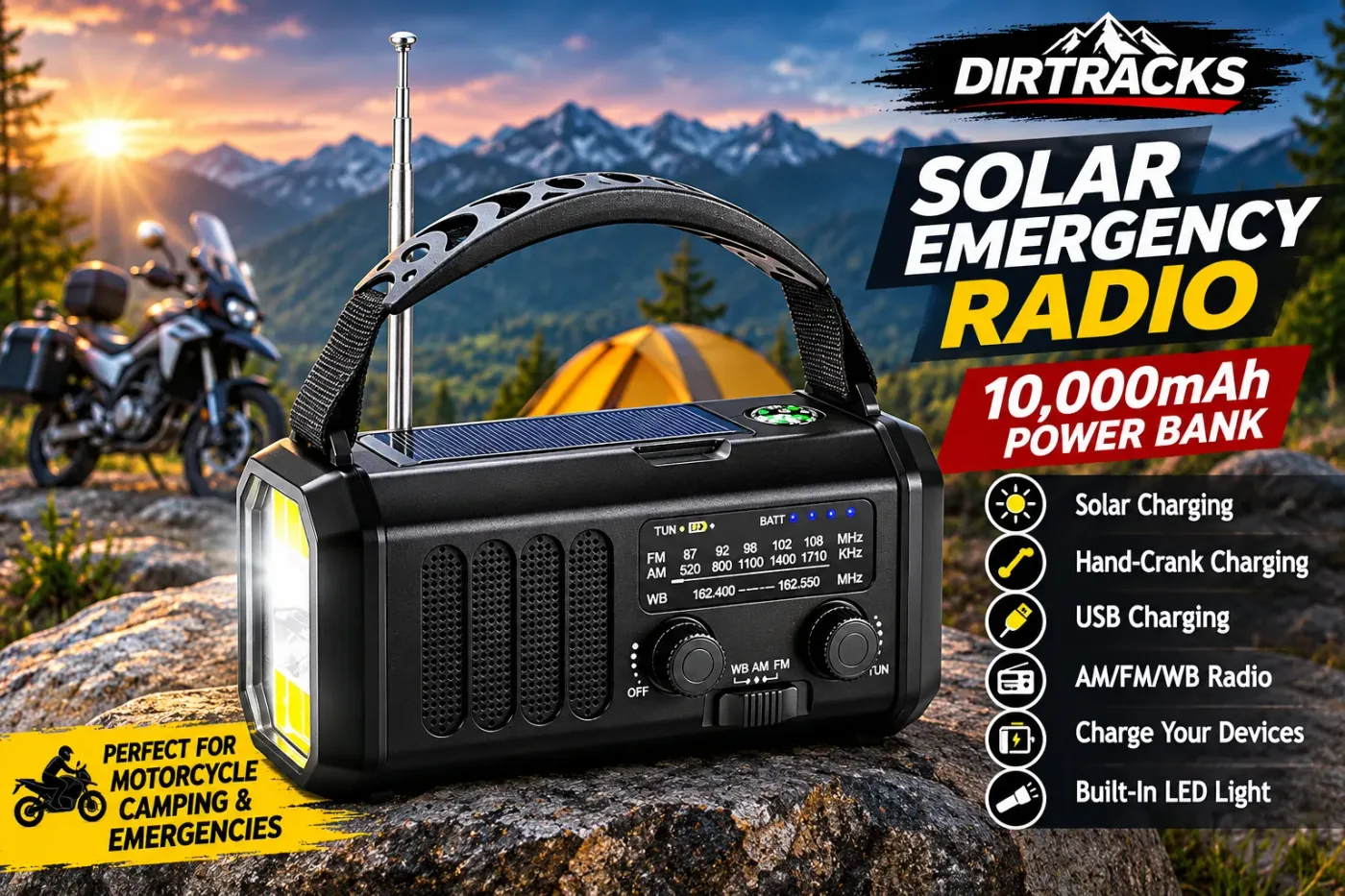
Each of the three charging methods refills the same 10,000mAh battery. If clouds block the solar panel or there's no outlet nearby, the crank still keeps you on air and your phone topped up.

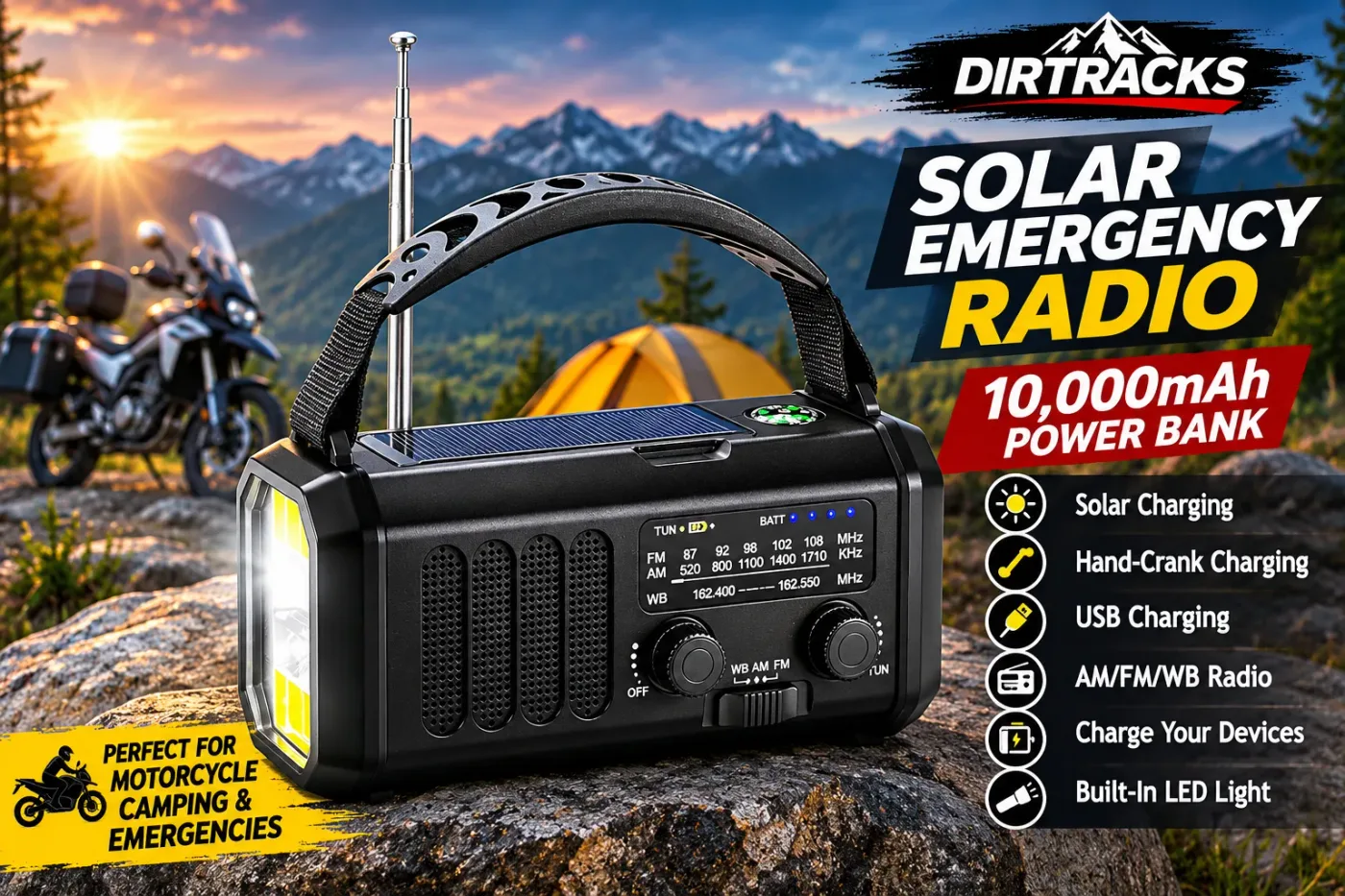
It usually starts with a search for what goes in a first emergency kit. The list keeps growing: flashlight, battery radio, power bank, AA batteries. Each one waiting on its own kind of power.
The cart fills fast. By checkout, a beginner owns a drawer of gadgets, each one waiting on its own kind of power.
Then the drawer closes. Nobody opens it again until the lights go out and the phone is already at single digits.
Why does a first kit let people down?
Batteries drain while they sit.
Store-bought cells lose charge slowly on the shelf, and old ones can leak and corrode the very device they're meant to power. Most beginner checklists skip this part.
A power bank fades the same way, quietly, from the back of a closet.
So the moment you actually need the kit (a storm outage, a breakdown on a back road, a campsite with no signal) is often the first time anyone checks it. That's a hard way to learn.
Buying more single-use gadgets doesn't fix it. It only adds more batteries to forget.
So, are solar and hand cranks just gimmicks?
Every device depends on stored power.
Call it the spare-battery trap: power bought ahead of time fades whether you use it or not. That's the problem.
Stocking more batteries or a bigger power bank only resets the clock.
The way out is gear that can refill itself when the outlet is gone.
That's where solar panels and hand cranks come in, and where skepticism is fair. Neither is fast. A small panel trickles power in over hours of sun, and a crank takes real effort for a modest top-up.
Their job isn't to replace a wall socket. It's to keep a big battery from ever hitting zero.
Will one radio actually cover it all?
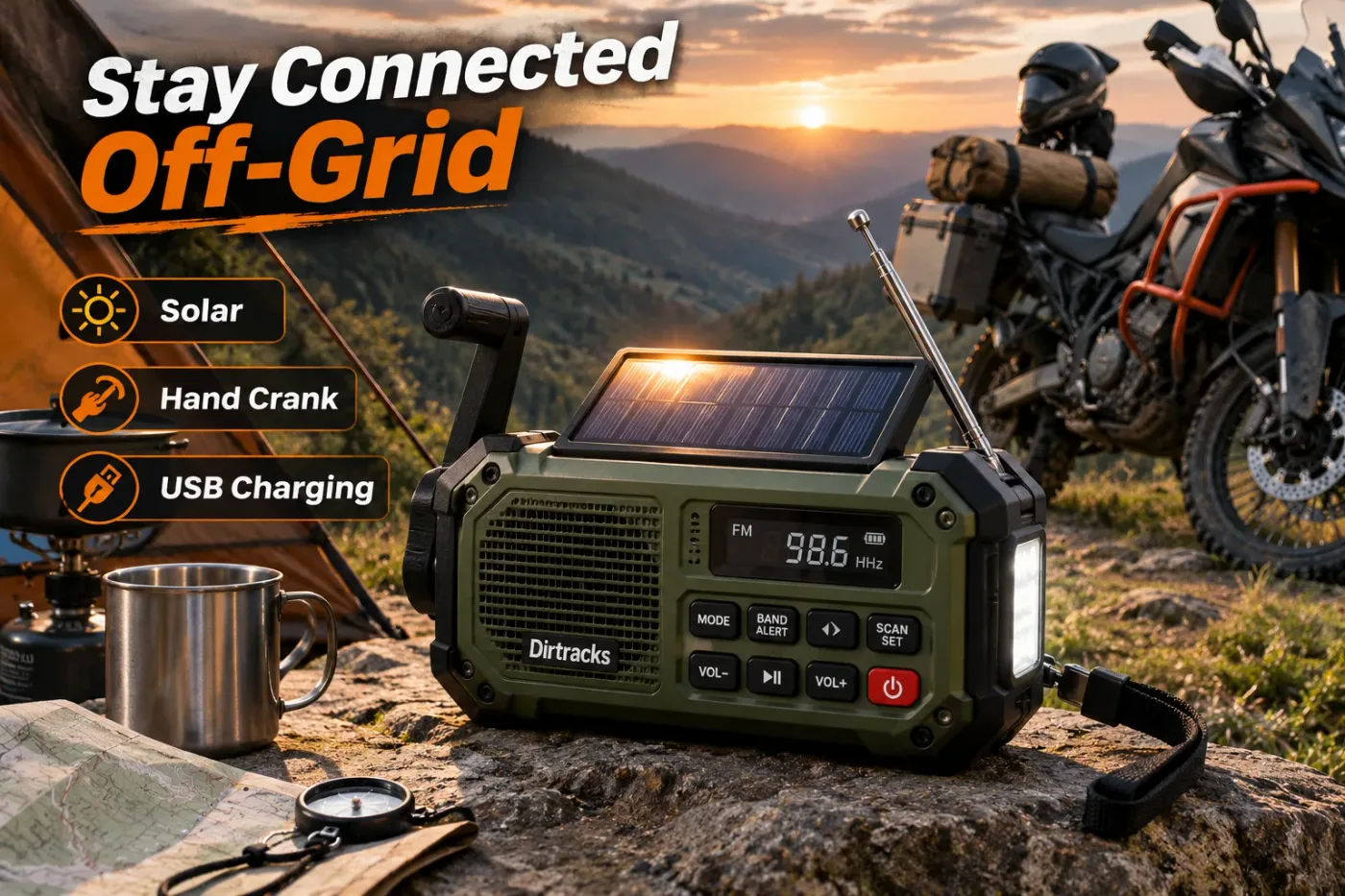
This radio closes the gap.
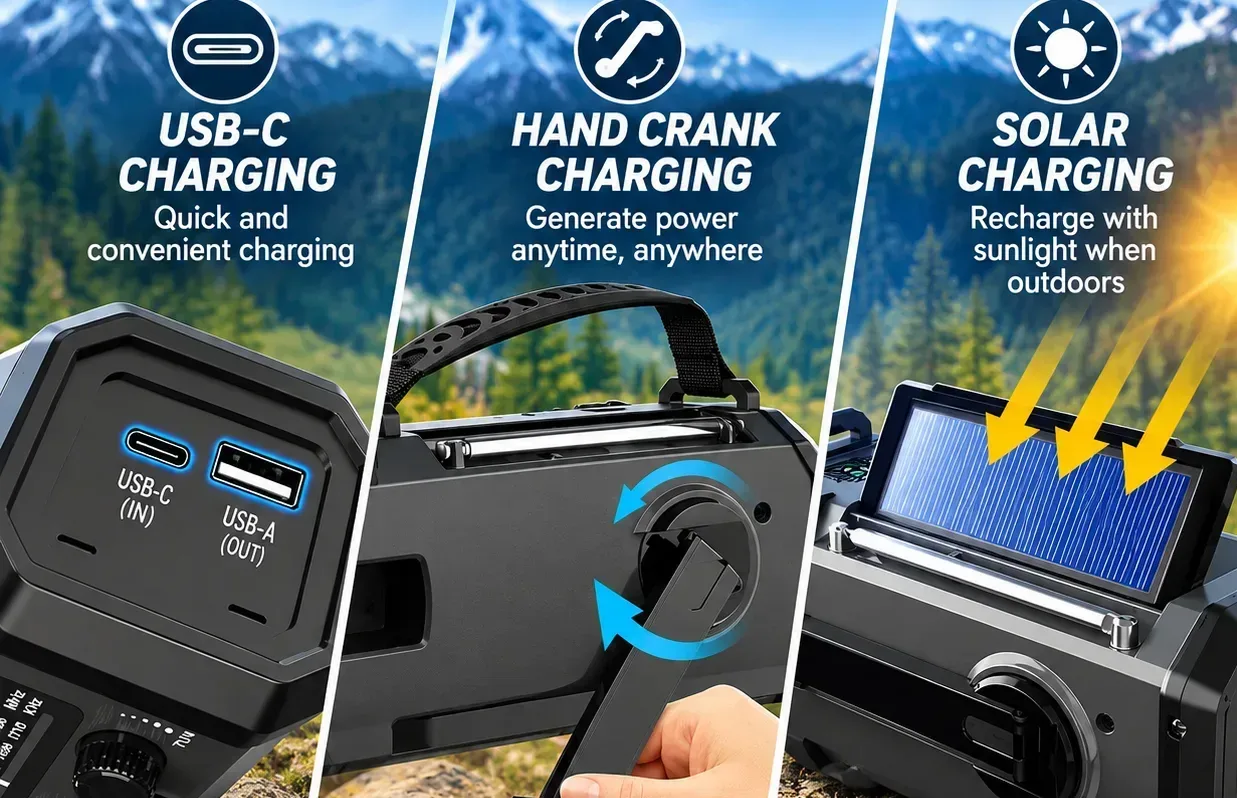
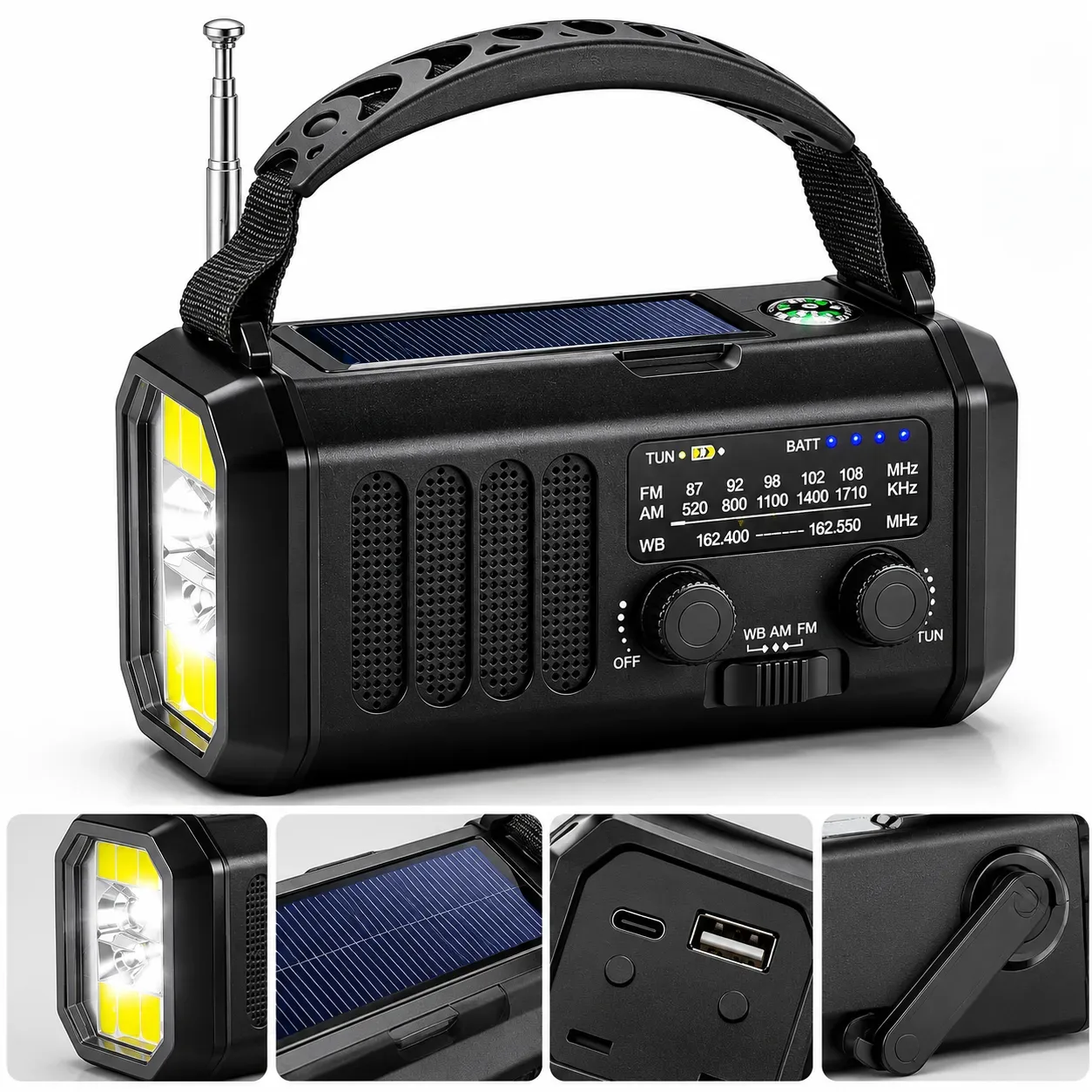
It answers the spare-battery trap with three ways into one battery: solar, hand crank, and USB.
Fill it from the wall at home. When the wall is miles away, the panel and crank keep it topped up.
The battery is the real story. At 10,000mAh, it holds far more than a typical emergency radio, so a slow solar trickle adds to a deep reserve instead of starting from empty.
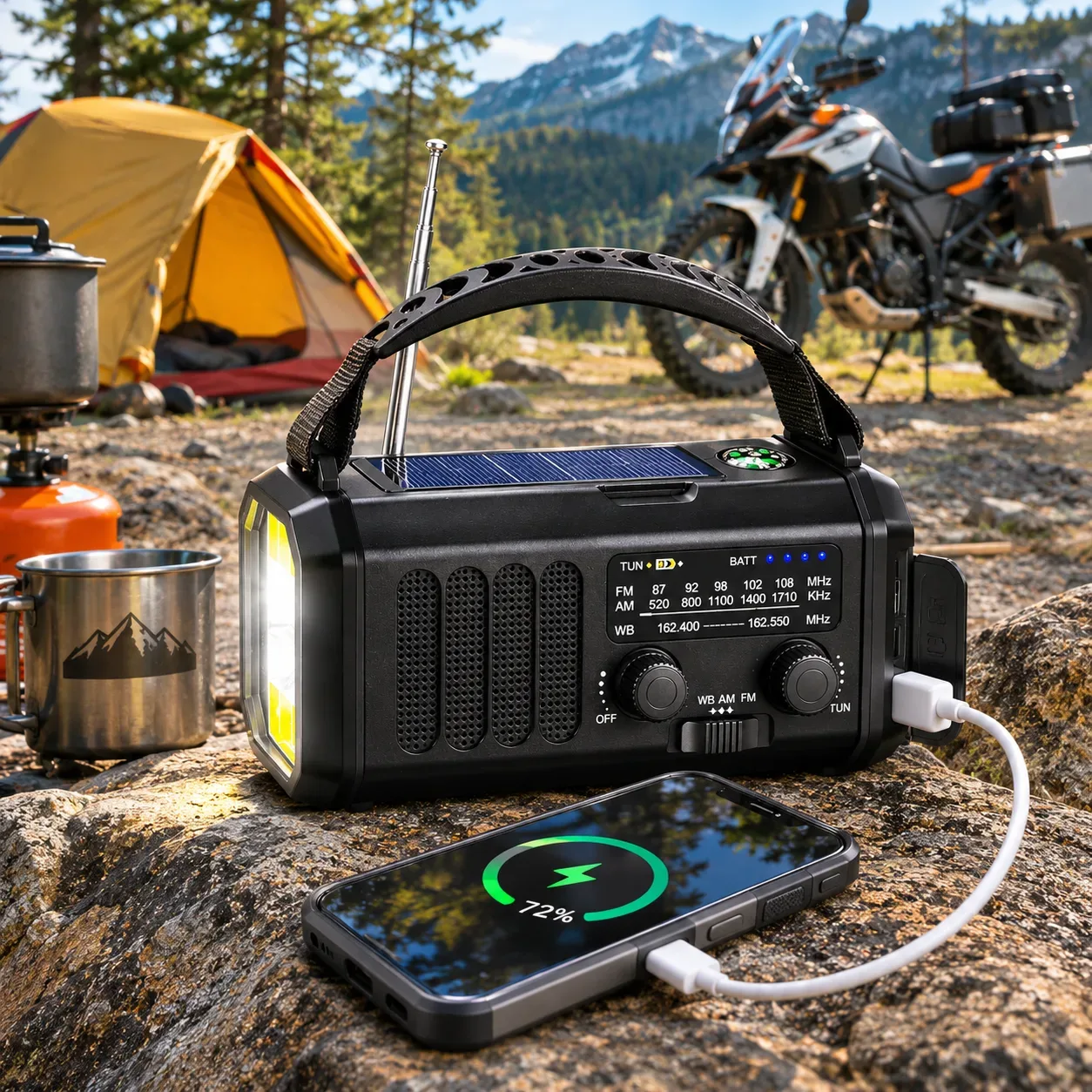
That same battery can charge your phone through its USB port. The radio side carries 50 station presets plus manual tuning, so finding a local broadcast is quick, even in the dark.
At about 500g with a carrying strap, it rides in a backpack, a motorcycle kit, or a hall closet. For a beginner, that's one device to charge and check instead of a whole drawer.
What does one radio cover in a first kit?
For someone building a kit from scratch, the real test is how many separate gadgets a single device can stand in for, and whether each job still gets done when the power is out for days.
What sets it apart?
Plenty of emergency radios list a crank or a panel on the box. The difference that matters to a beginner is what those chargers feed, and how easy the whole unit is to carry and forget about until it's needed.
Why are first-time kit builders choosing it?
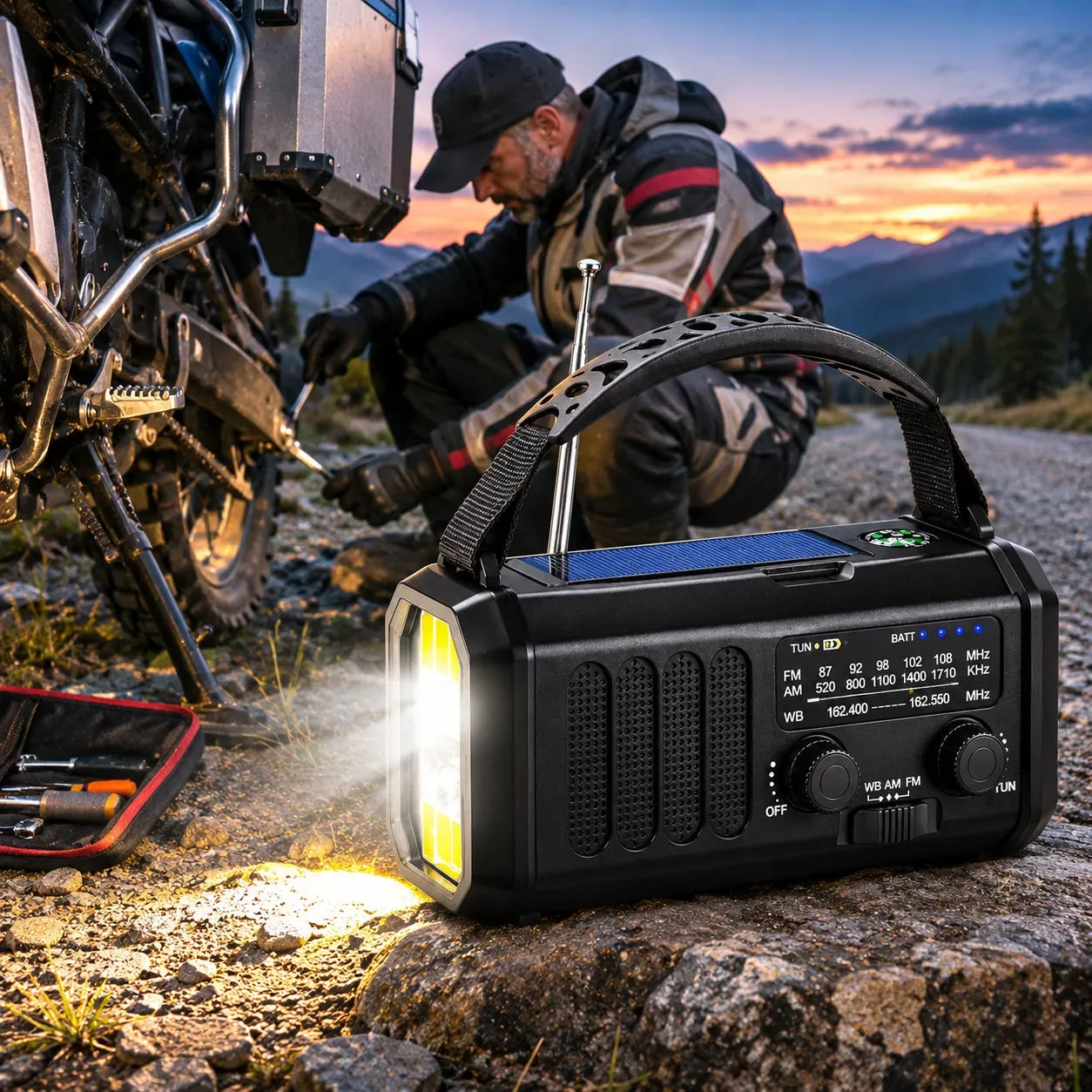 1
Hand-crank charging works in complete darkness
The hand-crank mechanism delivers power independent of weather, time of day, or any external condition. Even a few minutes of cranking restores enough charge to broadcast an emergency alert or receive critical weather updates—no sun, no outlet, no battery required. This matters most when stranded at night or in dense cover where solar alone falls short.
2
10,000mAh battery outlasts a typical emergency radio by hours
Standard emergency radios ship with 2,000–4,000mAh capacity; this model carries 10,000mAh. That difference means continuous radio operation for days on a single charge, or enough reserve to power a flashlight, phone top-up, or alert transmission without draining the main reserve. One device replaces the need to rotate backup batteries or carry a separate portable charger.
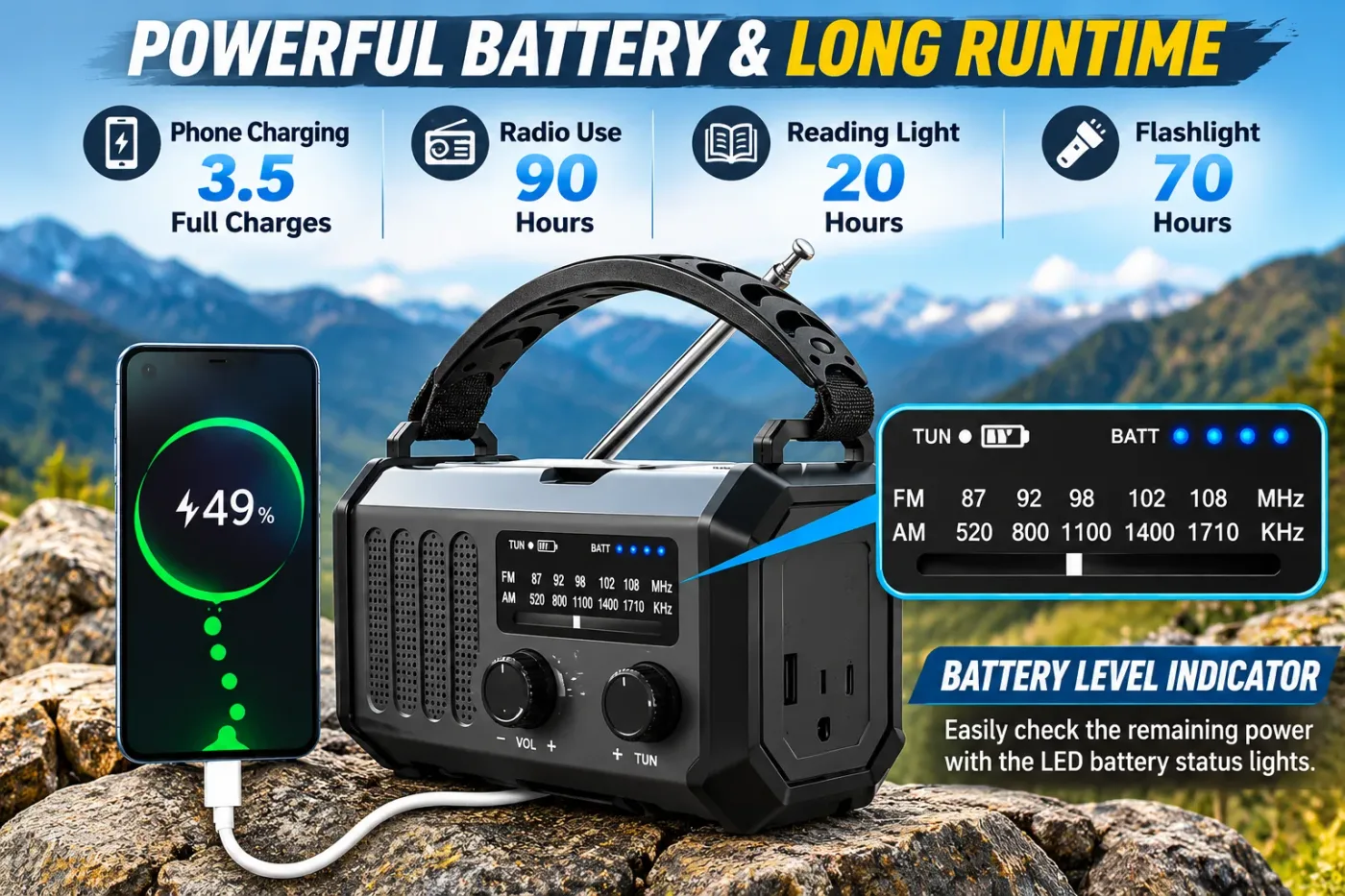 3
Solar charging means weeks unplugged without anxiety
Leave the radio on a backpack or tent in daylight and it charges continuously—no intervention, no search for a wall outlet. Solar panel efficiency ensures usable charge accumulates even on cloudy days. Paired with hand-crank backup, this eliminates the scenario where the battery dies and no power source exists. Peace of mind comes from genuine redundancy, not marketing.
 4
ABS plastic handles harsh terrain without electronics failure
ABS polymer resists impact, moisture, and temperature swings that destroy cheap electronics in the backcountry. Drops onto rocks, exposure to rain and dust, and freeze-thaw cycles on high-altitude trips do not compromise the radio's core function. The durable shell keeps internal circuitry working when lighter, fancier materials would fail—a practical choice over industrial styling.
 5
50 presets eliminate tuning delays when time matters
In an emergency, manually scanning 100+ radio stations wastes seconds you don't have. This model stores 50 stations across public safety, weather, and commercial bands, indexed for instant access. When a storm arrives or communication is critical, the preset list cuts through dead air to relevant broadcasts immediately. The convenience becomes essential reliability when split-second information saves decisions.
What should you expect?
A self-charging radio works best with a little setup on day one and almost nothing after. Knowing when to fill the battery, and when the sun and crank take over, is what keeps it ready.
Why not just stick with what you have?
A flashlight, a battery radio and a power bank can cover the basics on paper. Side by side, the question is which setup still has power after months in a drawer, and which one can refill itself.
- 2,000mAh batteries or smaller
- Single charging method only
- Heavy brick design exceeds 800g
- No station memory presets
- Battery dies after one season
- 10,000mAh battery—5x typical capacity
- Three charging methods: solar, crank, USB
- Lightweight 500g portable design
- 50 station presets built-in
- Always ready when needed
Get Started Today
What else do first-time kit builders ask?
Most of the questions come down to trust. Does the solar panel really charge it on a cloudy day? How long does cranking take? Is plastic tough enough for a trail or a motorcycle bag?
Build your first kit around one radio that recharges itself